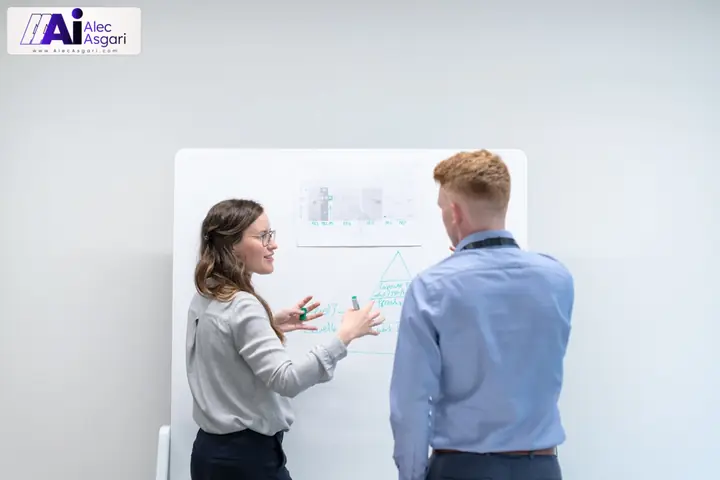
An AI-ready organization is an enterprise that adapts its structural workflows, decision rights, and capability models to integrate emerging artificial intelligence tools safely and effectively. In many contemporary offices, the most effective AI instruction is happening not through top-down mandates, but through peer-to-peer reverse-mentoring where younger employees guide older colleagues. This dynamic challenges traditional hierarchies and forces leadership teams to rethink how organizational knowledge is built, shared, and scaled.
As artificial intelligence capabilities become embedded across enterprise systems, the pace of technology adoption frequently outstrips traditional training cycles. Leaders often assume that competency flows downward from executive direction and formal learning programs. However, workplace trends show that digital-native employees frequently adopt new software tools and generative interfaces with greater ease. Rather than maintaining rigid silos, progressive teams are pairing junior staff with seasoned managers to accelerate mutual learning.
Understanding this shift requires looking beyond basic tool adoption and examining the mechanics of knowledge transfer. When organizations rely solely on formal top-down training, they often encounter adoption friction, low utilization rates, and deep resistance among teams accustomed to legacy workflows. Reverse-mentoring bypasses these barriers by creating low-stakes environments where practical application takes precedence over corporate hierarchy.
The Mechanics of Cross-Generational AI Integration
The emergence of reverse-mentoring is not merely a cultural phenomenon; it is a direct response to a fundamental gap between legacy business processes and modern workflow automation tools. Older professionals often possess deep domain expertise, historical context, and institutional knowledge regarding why certain business rules exist. Yet, they may struggle with prompt engineering, unstructured data handling, or rapid experimentation. Conversely, younger staff members often exhibit high digital fluency but may lack the contextual judgment required to evaluate whether an AI-generated output is legally, operationally, or ethically sound.
When these two perspectives intersect, a complementary loop forms. The junior employee demonstrates how to structure queries, automate repetitive drafting tasks, or synthesize large volumes of unstructured data. The senior colleague provides the critical guardrails, asking whether the underlying assumptions are valid, verifying the output against regulatory standards, and determining if the result aligns with organizational goals. This exchange transforms technology adoption from a solitary struggle into a collaborative operational improvement.
Furthermore, this dynamic alters how teams view organizational authority. In a traditional structure, expertise is strictly correlated with tenure and title. When a manager must ask a junior analyst for assistance with an AI workflow, the nature of workplace collaboration shifts toward a competence-based model. This shift helps dismantle status anxieties that often prevent older workers from experimenting with unfamiliar software.
Distinguishing True Collaboration from Hype-Driven Initiatives
It is essential to distinguish sustainable reverse-mentoring from superficial corporate initiatives. A genuine knowledge-sharing practice is built on psychological safety, mutual respect, and clear operational objectives. By contrast, forced or performative pairing programs often fail because they treat mentoring as a compliance checklist rather than a workflow optimization strategy.
When organizations approach reverse-mentoring as a PR exercise or a trendy perk, participants often view it as a distraction from core responsibilities. Sustainable adoption requires embedding these learning loops directly into daily operations. For example, a marketing team might schedule shared sessions not to talk about technology in the abstract, but to co-create a new client research synthesis workflow using generative tools.
Another common misconception is that reverse-mentoring implies that traditional management structures are obsolete. Some commentators argue that because younger workers understand technology, traditional hierarchies should be dismantled entirely. This perspective misjudges the function of organizational design. Hierarchy and management structures exist not just to route information, but to maintain accountability, manage cross-functional dependencies, ensure data privacy, and resolve governance exceptions. Technology adoption does not eliminate the need for leadership oversight; it shifts the manager's role from routine task supervision toward exception handling, ethical governance, and strategic coordination.
Illustrative Scenario: Redesigning Cross-Functional Workflows
To see this dynamic in practice, consider a hypothetical mid-sized professional services firm experiencing slow adoption of enterprise CRM and AI-assisted documentation tools.
In the current-state process, senior project managers draft client proposals entirely from scratch using fragmented historical documents. They rarely utilize AI summarization utilities because the interface feels unfamiliar and time-consuming. Meanwhile, junior staff members use AI tools regularly for drafting and research, but their outputs often lack the nuanced contractual context required by senior leadership. The workflow suffers from repeated manual handoffs, inconsistent document quality, and evident frustration across experience levels.
In the redesigned-state process, the organization implements structured reverse-mentoring pairing sessions embedded directly into project lifecycles. A senior project manager teams up with a junior analyst to overhaul the proposal drafting workflow.
During these sessions, the junior analyst demonstrates how to configure prompt libraries and structured templates to aggregate project notes and past proposal data. The AI assists by generating initial structural drafts and extracting recurring themes from unstructured client meeting transcripts. However, the human remains entirely responsible for the final output. The senior manager reviews every generated section for accuracy, client-specific constraints, and contractual compliance.
When the AI-generated draft contains ambiguous phrasing or missing compliance references, a formal human review is triggered. The senior manager guides the junior analyst on why specific clauses must be phrased conservatively, ensuring that regulatory and privacy standards are met. This iterative process accelerates document preparation while preserving rigorous human accountability and transferring domain context downward just as technical skill moves upward.
Practical Framework for Implementing Reverse-Mentoring
Organizations looking to foster effective cross-generational technology adoption can apply a structured, step-by-step framework.
- Identify capability gaps: Assess where team members struggle with modern software tools, AI interfaces, or workflow automation, separating technical hesitation from genuine domain complexity.
- Form voluntary pairs: Match junior employees with senior colleagues based on complementary skill sets rather than strict reporting lines, ensuring that participation is voluntary and purposeful.
- Anchor in real workflows: Focus mentoring sessions on actual operational challenges, active projects, and daily tasks rather than abstract theoretical training.
- Define human and AI roles: Clearly establish which activities require automated assistance and which demand strict human judgment, review, and accountability.
- Establish feedback loops: Regularly review how the mentoring dynamic is functioning, remove logistical barriers, and celebrate collaborative process improvements.
Diagnostic Checklist for Assessing Technology Adoption Culture
Leaders can use the following observable signals to evaluate their organization's readiness for cross-functional knowledge sharing and AI integration.
- Are senior leaders and experienced managers openly asking colleagues for assistance with new software tools and AI interfaces?
- Do junior employees feel comfortable challenging legacy workflows and suggesting automated alternatives without fear of professional penalty?
- Are cross-generational mentoring pairings integrated into regular operational projects, or are they treated as isolated HR initiatives?
- Is training focused on practical problem-solving and governance, or is it driven by software hype and superficial metrics?
- Are management responsibilities shifting away from routine document routing toward exception handling, ethical oversight, and strategic coordination?
Risks, Limitations, and Trade-Offs
While reverse-mentoring offers significant advantages, leaders must navigate distinct trade-offs and operational risks.
One primary risk is automation bias—the tendency for users to over-rely on AI-generated outputs without sufficient critical scrutiny. Younger employees, while digitally fluent, may lack the industry experience required to spot subtle errors, compliance violations, or biased data in automated responses. If senior colleagues abdicate their review responsibilities out of deference to technology or their younger mentors, organizational risk increases.
Another consideration is workforce friction and status anxiety. When traditional power dynamics are temporarily inverted, some senior employees may experience discomfort or resistance. Leaders must ensure that reverse-mentoring feels supportive rather than patronizing or diminishing to decades of accumulated domain expertise.
Additionally, data governance, privacy, and security standards must be strictly enforced. Informal experimentation with AI tools can easily lead to the inadvertent sharing of sensitive client data or proprietary code. Effective adoption frameworks must pair peer-to-peer learning with robust data usage guidelines, ensuring that enthusiasm for new workflows never outpaces compliance and security protocols.
Conclusion
Integrating artificial intelligence and modern workflow tools successfully requires more than software procurement; it demands cultural and structural adaptability. The rise of reverse-mentoring demonstrates that organizational capability is distributed across all age groups and tenure levels. By recognizing that technical fluency and institutional wisdom are mutually dependent, leaders can build resilient systems where employees at every level contribute to continuous operational improvement.
Next steps for leadership teams include auditing current collaboration channels, identifying natural pairing opportunities around active workflow projects, and establishing clear governance guardrails. Embracing this collaborative approach ensures that technology adoption strengthens both organizational performance and cross-functional trust.
References

Alec Asgari
Author & Content Creator
Passionate about creating valuable content and sharing insights from real automation and CRM projects.